


Food Safety in Europe – European Food and History, 19th - 21th Centuries
Date : Mardi, 2 septembre, 2025 - 07:00
Type d'événement : Autre
Axe(s) de recherche : 3. L’Europe comme civilisation matérielle en transitions
Thème(s) : 3. Civilisation matérielle en transitions
Projet(s) transversal(aux) : Alimentation
Participant.e : Jean-Pierre Williot
Adresse : Centre des colloques du Campus Condorcet - place du Front populaire (Aubervilliers), Sorbonne - 17, rue de la Sorbonne (Paris 5e), France
Programme en PDF : programme_-_food_safety_in_europe_-_european_food_and_history_19th_-_21th_centuries_0-bc5.pdf
Présentation :
Food safety is a major challenge for all societies and civilizations. The evolution of pathologies associated with food has a significant influence on demographic variables over the long term. Ensuring consumers a healthy diet thus generates marketing regulations, recommendations for food processing and packaging, and frameworks for monitoring food production and distribution.
The forms of this food safety have continued to be clarified to the point of taking on the contemporary meaning of this expression. It makes it possible to distinguish between food security, made up of production capacities and the balance of supply chains, and food safety, based on the safety of food. The intensification of scientific knowledge, mastery of techniques, financial issues and the effects of notoriety that agri-food industries such as artisans, businesses and catering establishments must control have led to the essential place that food safety occupies in our contemporary societies.
There are many actors involved: public authorities that have a mission to protect populations at multiple administrative levels; scientists who are developing increasingly detailed knowledge of food mechanisms; agronomists who isolate the least harmful plant varieties; veterinarians who supervise breeding practices; doctors, nutritionists, and dieticians who recommend health checks; food transport and storage companies, responsible for conservation conditions in increasingly precise atmospheres; and finally, those who cook, purchase food and eat, and must ensure safe food each time for consumption.
The subject of food safety has taken on such proportions that national and international institutions are dedicated to it in all countries with varying levels of requirements and in Europe with the EFSA (European Food Safety Authority) since 2002. These institutions are the heirs of the investigations and awareness of the need to monitor the diet of populations which generated from the middle of the 19th century the regulatory, normative and monitoring action of food sold in the city. They are also the extension of legislation put in place in the United States (Food and drug administration) and in Europe since the beginning of the 20th century.
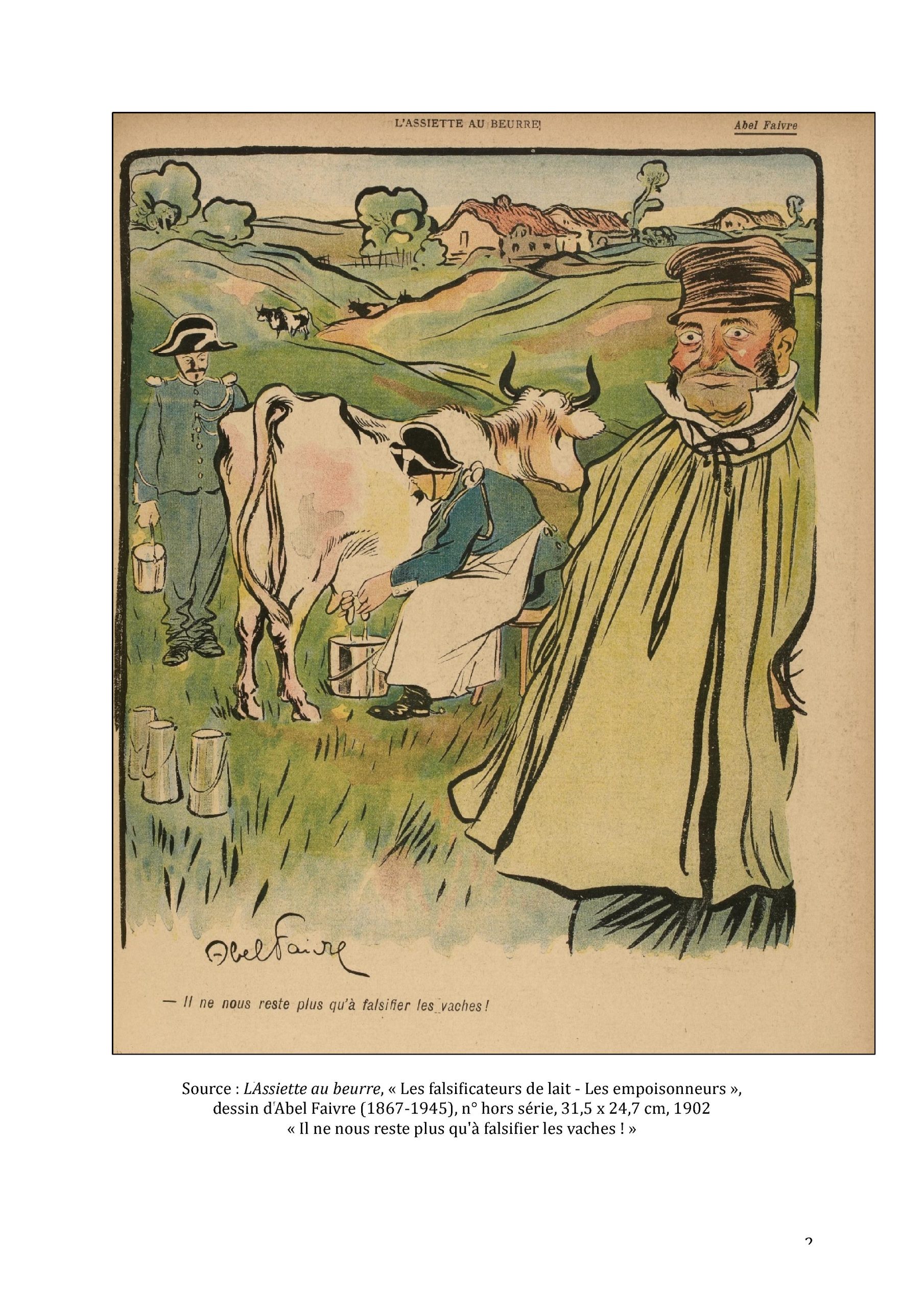
If these questions have taken on such importance, it is because there are many flaws in the food chain. They are at distinct levels. Food safety has become all the more necessary as criminal commercial practices have increased in line with the lengthening of commercial circuits or behaviour that shows little concern for customers. The fight against fraud has thus become an imperative means of guaranteeing food. But health crises of another magnitude since the end of the 20th century have raised the need to strengthen control strategies and public policies for health safety, and therefore food safety. The BSE crisis created a shock in Europe to which public authorities had to respond with increasingly restrictive regulatory frameworks. The harmonization of practices in Europe, slowly formed by regulations and municipal and regional actions, poses the problem of food safety in terms of scientific expertise and circulation of information. In addition to European directives which were concerned with harmonization on labelling or nutritional quality, interventions on food safety itself have been added. In the midst of the BSE crisis, the President of the European Commission, Jacques Santer, took note of the need to strengthen European action in these terms: “I plead for the gradual establishment of a real food policy which grants primary attention to consumer protection and health. In this context, I am in favour of compulsory and systematic labelling. I also think that the creation of an independent Agency, responding to the specific needs of the Community while drawing inspiration from the positive aspects of the American FDA, should be considered” (Speech by Jacques Santer, debate on the report of the Commission of inquiry into BSE in the European Parliament, Strasbourg, February 18, 1997). The expectations of consumers and citizens of the European Union required more information and guarantee of product quality. The food hygiene security policy resulted in the creation of the EFSA (European Food Safety Agency, based on the French Afssa model) in 2002.
Its role is to assess risks relating to food safety and to propose opinions intended to form the basis of food legislation in Europe. A competition took place between Finland and Italy to host the headquarters. The Agency was finally established in Parma. The history of European food is now being written in part within this institution. But there’s more to the history of food safety than recent regulations. In the 19th century, the multiplication of frauds and even their frequency, which all observers pointed out, merit further study. The colloquium will therefore focus as much on contemporary players and developments as on those of the previous two centuries.
The purpose of this conference is to explore the plurality of actions, actors, methods and gains or withdrawals from food safety in the 19th to 21st centuries. Two false routes must be avoided. Food safety is not the only product of regulations and institutions born at the end of the 20th century as part of a strengthening of public policies. It was already informed by municipal policies, of which the city of Brussels set the example in the middle of the 19th century. It already mobilized forms of expertise and the international circulation of information. It will therefore be appropriate not to limit ourselves to an approach exclusively focused on a history of the present time. Food safety is also not exclusively linked to public regulation and surveillance but just as much to the practices of companies whose permanent responsibility, increasingly judicialized, tends ever more towards demanding control procedures. The qualitative approaches of the agri-food industries must therefore be widely considered in this process of guaranteeing food safety.